Photo Durham Logo - Link to Home Page
Showing posts with label insect flight. Show all posts

Monday, March 29, 2010

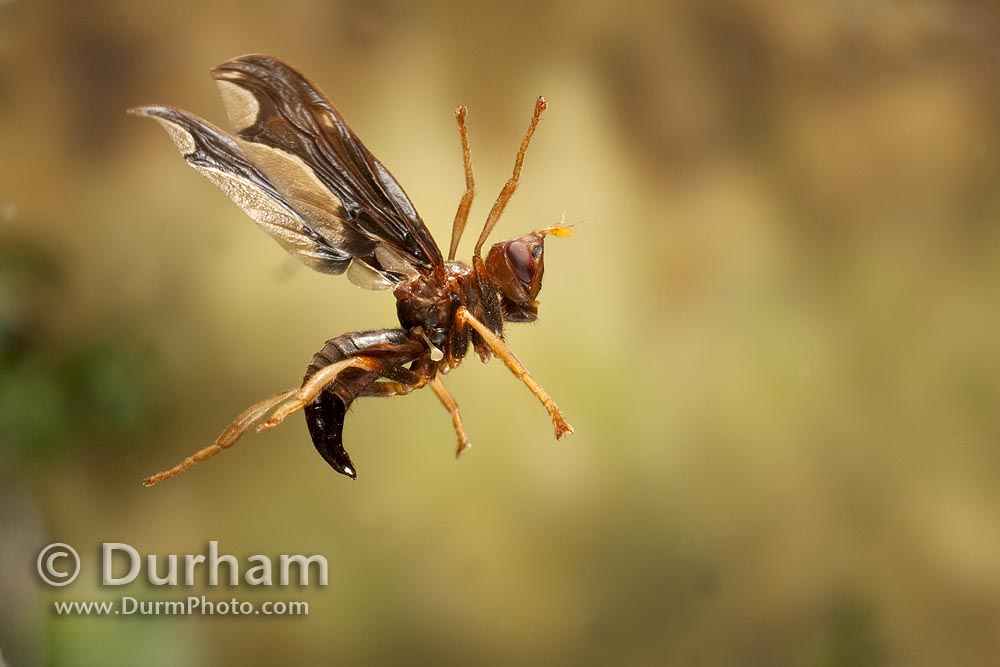
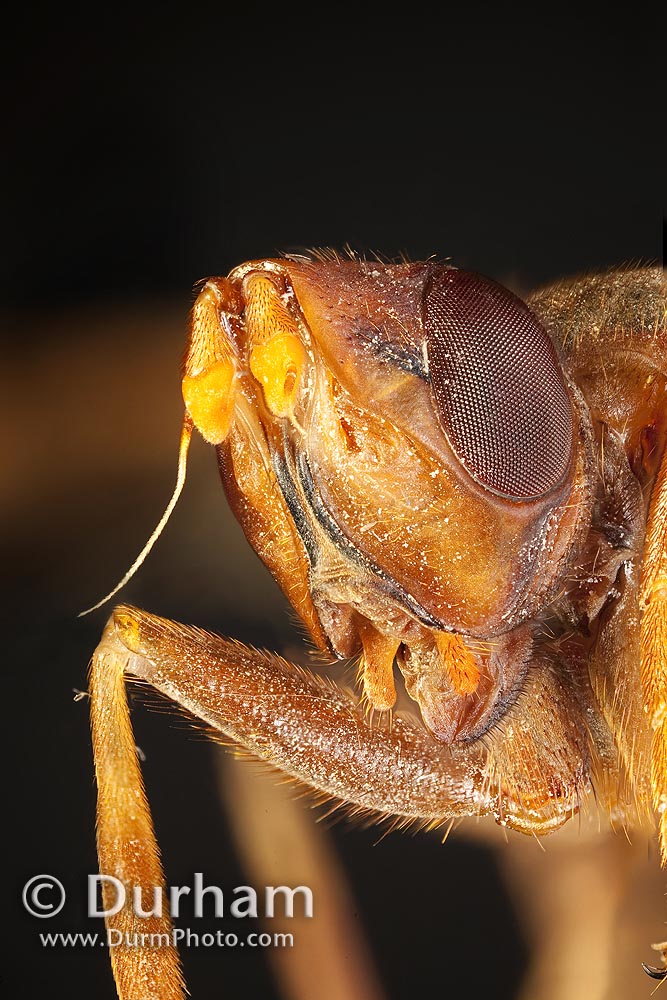
Parastic Fly (Pyrgota undata)

This amazing looking creature is a large member of the fly family, but with a with a unusual life cycle. Flying mostly at night, they will chase june beetles in the air and while in flight, lay a single egg on the beetle. 


Imagine this thing chasing you with graspers out, ready to grab on.

pyrgota undata
parastic fly (Pyrgota undata) in flight


The egg will shortly hatch and the larva will drill into the beetle. Once inside they begin to feast until the beetle is dead.

pyrgotidae fly
parastic fly (Pyrgota undata) portrait

Wednesday, March 24, 2010

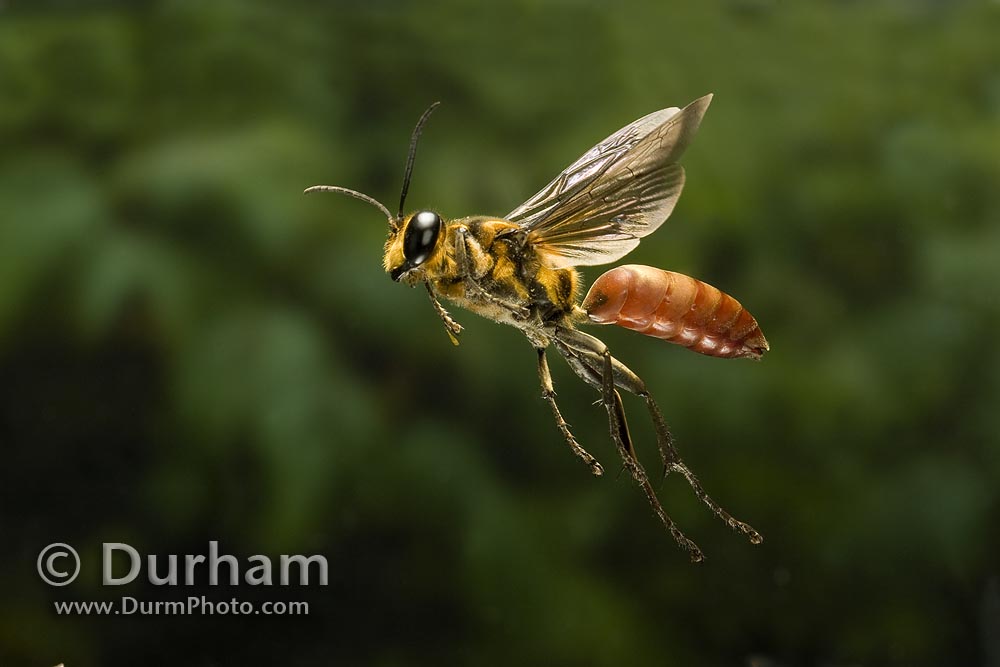
Colorful Wasp (Sphex habenus)

Wasps are noted for their reproductive sculduggery. Most depend upon a host insect of another species, and they engage in various forms of kidnapping and poisoning to make this happen. The host is usually kept alive in a state of paralysis until newly hatched young are hungry and ready to eat. There are a thousand variations of this tale, and the complexity involved can be astounding. It is the stuff of horror films.


From IMDB entry for Ridley Scott's ALIEN movie:  The alien's habit of laying eggs in the chest (which later burst out) was inspired by spider wasps, which are said to lay their eggs "in the abdomen of spiders." This image gave Dan O'Bannon nightmares, which he used to create the story. But spider wasps (pompilidae) lay eggs on their prey, not inside them, after which the wasp maggots simply snack on the sting-paralyzed spiders. O'Bannon may instead have been thinking of either ichneumon wasps or braconid wasps. The ichneumon drills a single egg into a wood-boring beetle larva, whereas braconids inject eggs inside certain caterpillars. Both result in fatal hatch-outs more alike to O'Bannon's alien.


This particular wasp is known for going after katydid nymphs. It is large and colorful with a painful sting.


colorful wasp (Sphex habenus)
colorful male wasp (Sphex habenus) (Family Sphecidae)

Friday, March 12, 2010

Termites In The Air (Reticulitermes flavipes)

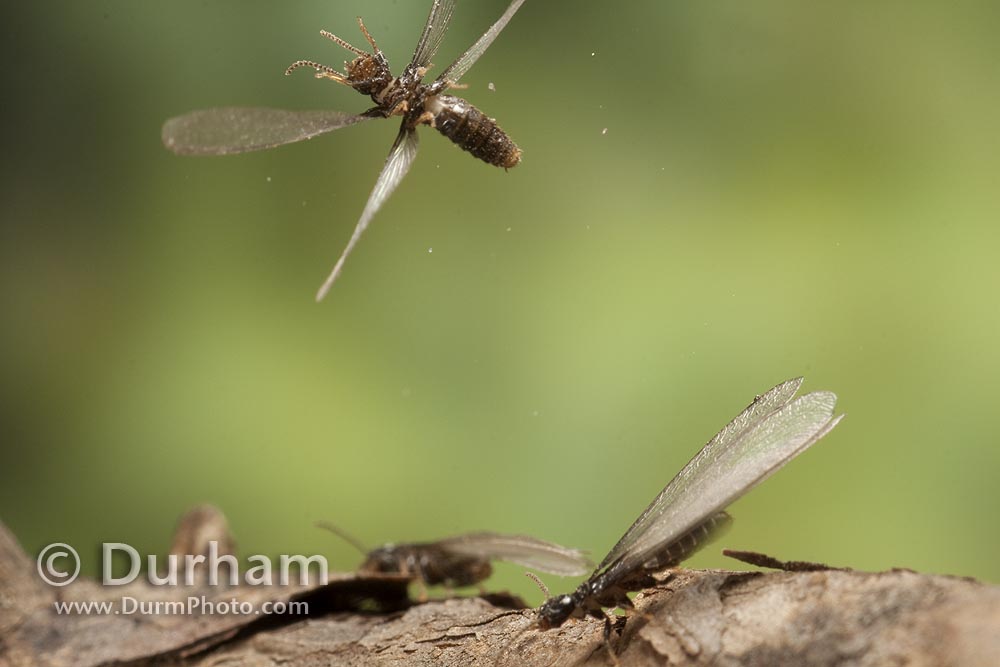
Thousands and thousands of termites filled the air on a warm, humid day. This phenomenon, while filling every homeowner with a sense of dread, is something to see. Hoping to get a photo of the colony from which all of the airborne termites were emerging, I took some time to locate the source, but by then, the emergence was mostly finished. This species must have contact with the soil to survive, so they are unlikely to inhabit a wood structure with a good, concrete foundation.


From AnimalsDiversityWebR. flavipes reproduce in swarms. Swarming occurs when a colony reaches a certain size and when temperature and moisture levels are favorable. Usually this occurs on warm days after rainfall. Some researchers speculate that swarming occurs after rainfall because the ground is moist, which make it easier to create a new nesting site (Benavides, 1988). Alates, winged swarmers, fly from their native nest until they hit a "fracture point" in the air. This causes their wings to fall off (Benavides, 1998) This flight is not considered a mating flight because R. flavipes are only sexually attracted to their mates after their wings have broken off (Light, 1922). Once they find a mate, which takes a while because the female is choosy, they walk together to find a suitable nesting site. They mate after they've built a "nuptial chamber" in their new nest (Benavides, 1998). At her peak a queen will lay an egg every 3 seconds, or 30,000 a day. She will lay 10's of millions of eggs during her life


winged termite
subterranean termites (Reticulitermes flavipes) workers and winged reproductives


flying termite
subterranean termites (Reticulitermes flavipes) beginning their reproductive and distribution flights.


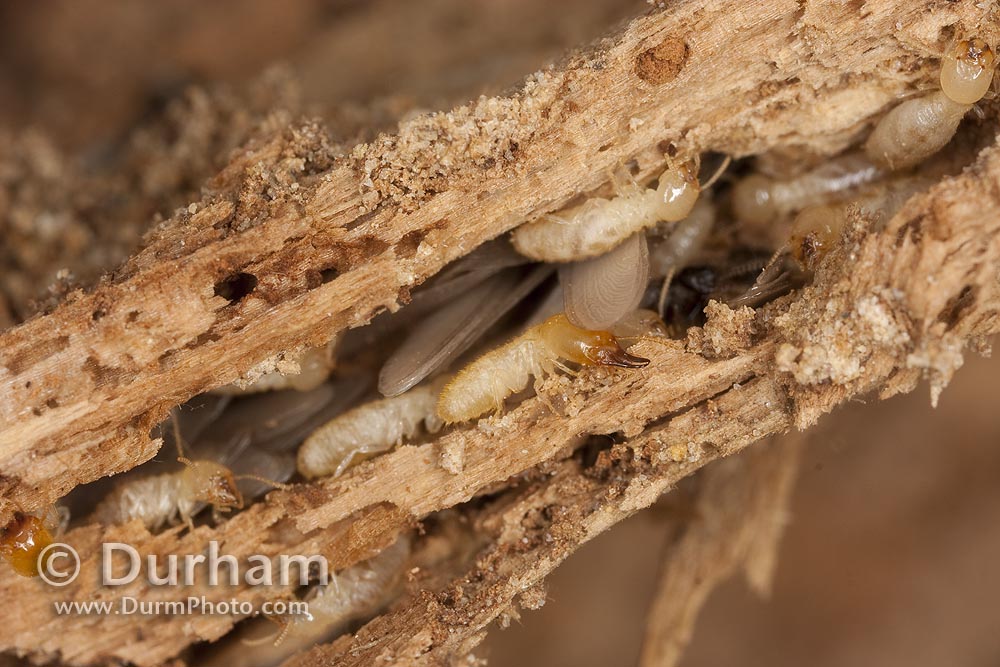
termite soldier
subterranean termites (Reticulitermes flavipes) workers and soldiers in decaying wood

Tuesday, March 09, 2010

More Fun With Parasites

A few posts back I mentioned the carrion beetle (Nicrophorus carolinensis). In keeping with the theme of parasites*, I am sharing another view of the same beetle with a detailed view of a few extra passengers.


carrion beetle in flight
carrion beetle (Nicrophorus carolinensis)


Watching the beetle, I could see the little white mites skittering across the beetle as it walked and flew about. It must be quite a ride for the little insects. Below is a detailed view of the same image with the mite clearly visible on the neck, and few more on the chest. It would roughly be equivalent of having a full size crab wandering around on a human.


carrion beetle with parasites
carrion beetle (Nicrophorus carolinensis) detail with mites


I posted these images to Flickr for hosting here, and a fellow Flickr alaskanent user posted this comment:

Nice shot! The mites are not parasitic however. They are mutualistic in some cases (beneficial) and in others commensalistic (the mites benefit but the beetles are neither harmed nor helped) and only in rare cases do they actually qualify as parasites. The mites eat fly eggs, thus cleaning carcasses of competitors so there is more food for the beetles.


Tuesday, February 23, 2010

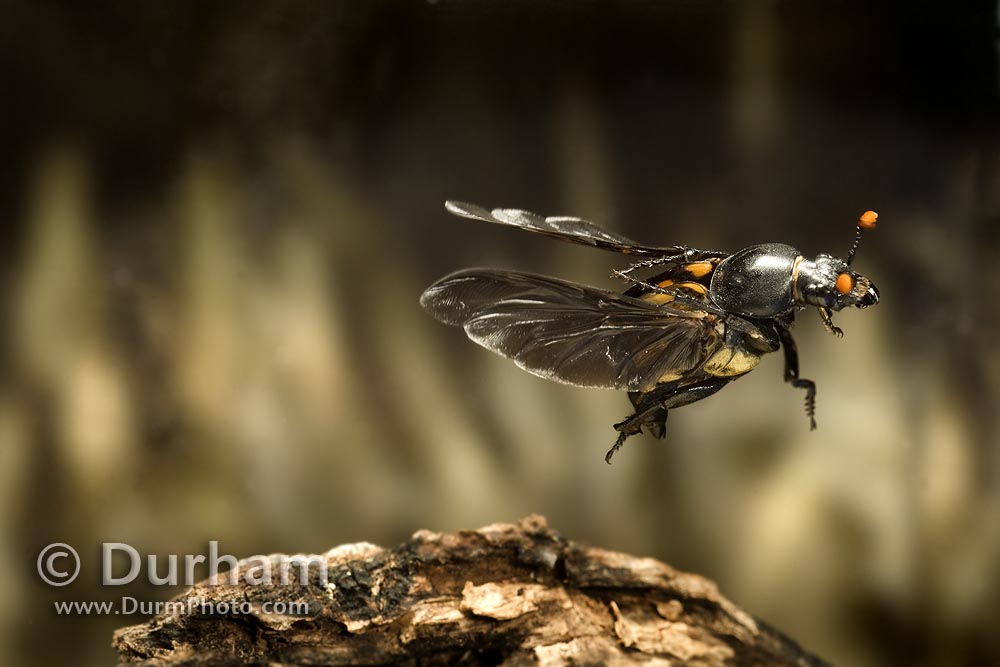
Carrion Beetle (Nicrophorus carolinensis)

Carrion Beetles feed on decaying organic matter, such as dead animals. They have the unique ability to help solve crimes...


from Wikipedia: They are a very important tool in determining a post mortem interval by collecting carrion beetle progeny from a body, and determining the developmental rate. Based on the number of instars present and what stage of development they are in, a time of death can be estimated. This is very useful in medicocriminal entomology, the emphasis on utilizing arthropods as evidence to aid in solving crimes.


92408TTb-394
Carrion Beetle (Nicrophorus carolinensis) in flight

Thursday, February 11, 2010

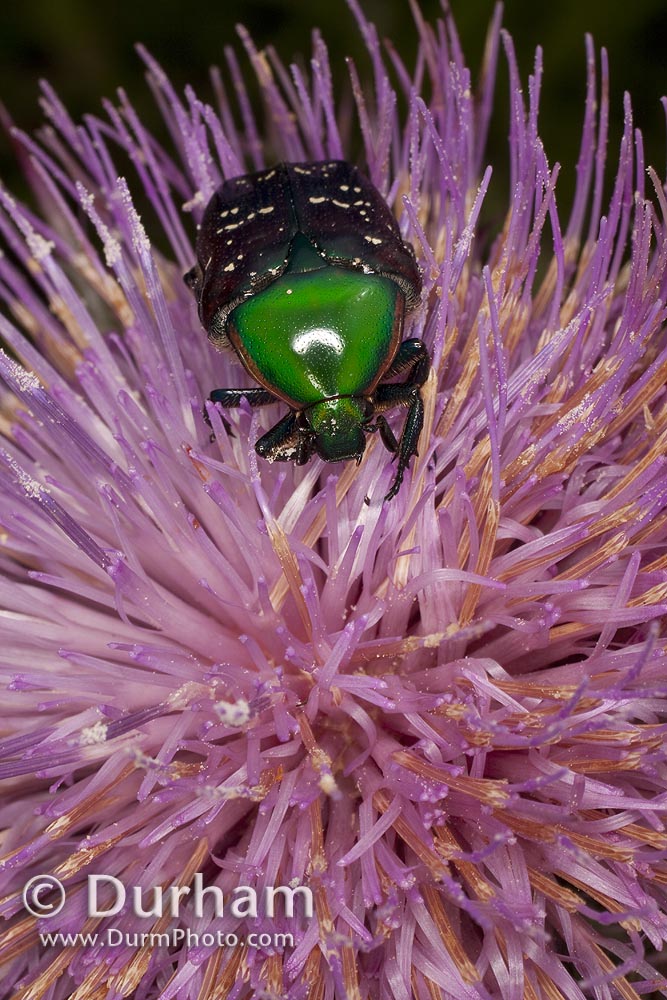
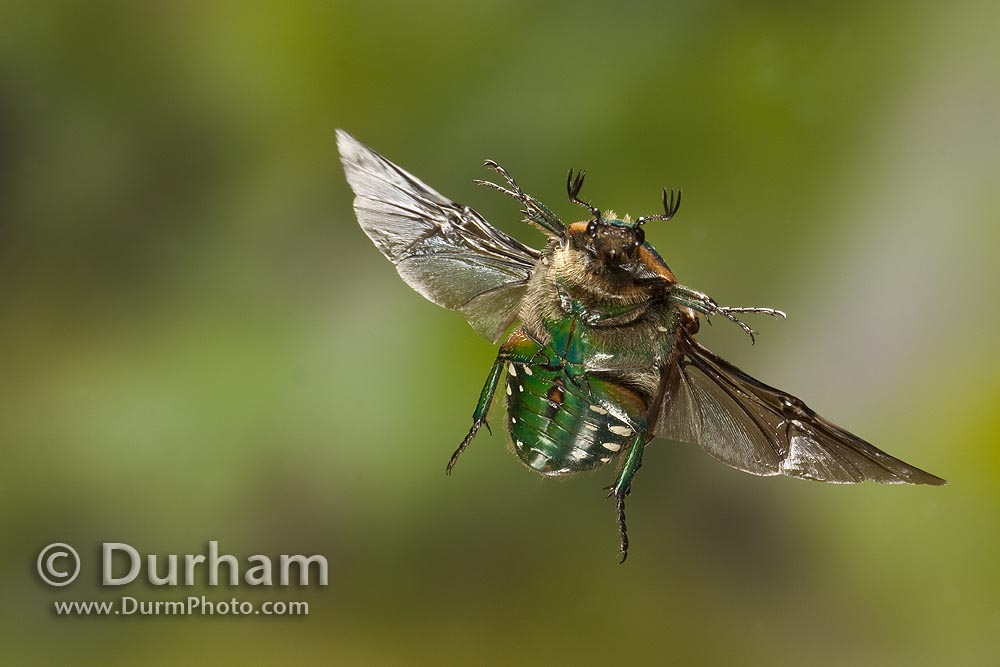
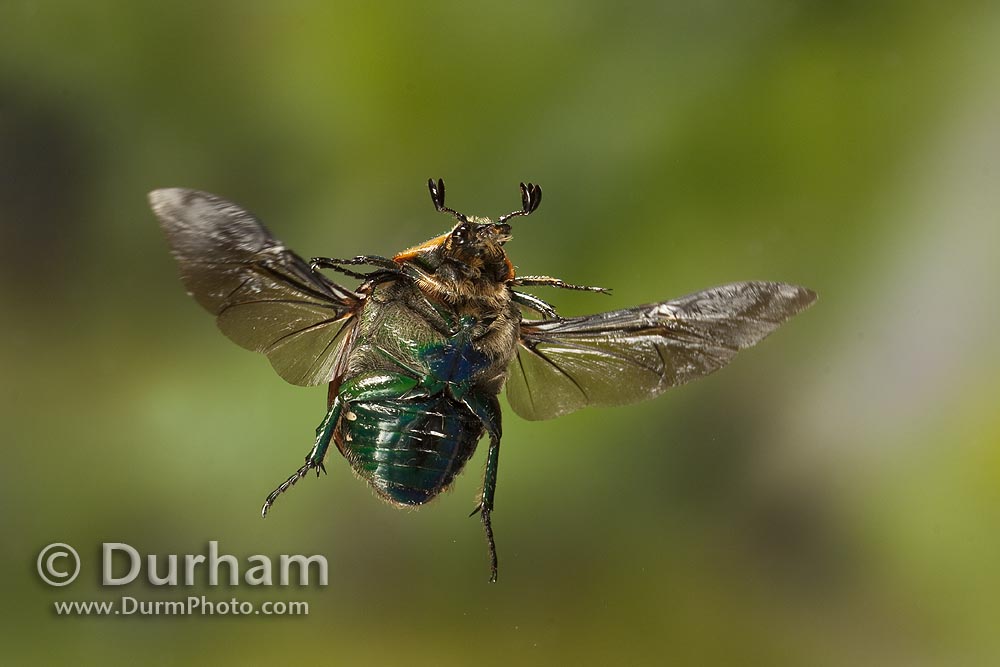
Euphoria Beetle (euphoria fulgida)


More than once, I have been startled by these colorful beetles. They fly with a noisy clack of the wings that at first, mimics the buzz of an angry bumble bee...


4109Smy-115
euphoria beetle (euphoria fulgida) collecting nectar from a thistle flower

32709efb-37-Edit
euphoria beetle (euphoria fulgida) in flight

32709efb-10-Edit
euphoria beetle (euphoria fulgida)
Subscribe in a reader

Enter your email address:

Delivered by FeedBurner

Details About Me

Portland, Oregon, United States
Husband, Father, Student Of Natural History, Photographer