Photo Durham Logo - Link to Home Page
Showing posts with label flying. Show all posts

Wednesday, April 28, 2010

Spotted Bat (Euderma maculatum)

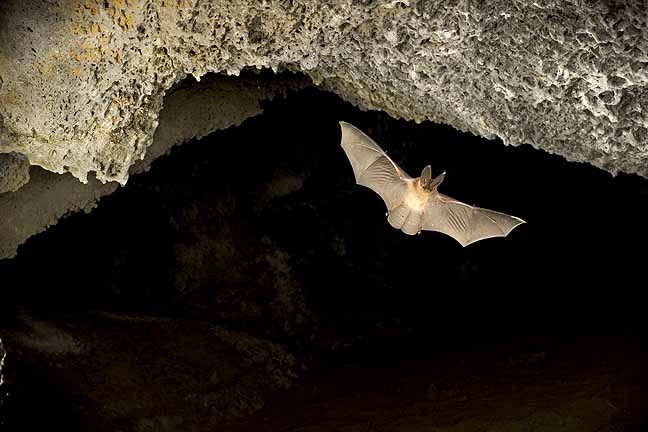
I have posted this species before - but this is another excellent example of a bat that does not fit the "brown or gray" category. The spotted bat is one of the most unique bats in North America, partly because of its huge ears, but also because of the three white spots on its back, and furry white underside.


They are rarely seen.


spotted bat (Euderma maculatum)
Spotted Bat (Euderma maculatum)


spotted bat (Euderma maculatum)
Spotted Bat (Euderma maculatum)


spotted bat (Euderma maculatum)
Spotted Bat (Euderma maculatum)


spotted bat (Euderma maculatum)
Spotted Bat (Euderma maculatum)


spotted bat (Euderma maculatum)
Spotted Bat (Euderma maculatum)

Monday, February 15, 2010

A Goofy Looking Insect - The White-Headed Fly (Archytas apicifer)

Insects are almost always interesting in one way or another – at least for me. It is not lost on me that many people find the crawling, flying and creeping denizens of the insect world creepy if not completely revolting.


Nonetheless, it is rare that an insect makes me laugh. This little white-headed fly seems to have an abundance of personality simply because it has a face that can be anthropomorphized – an unusual occurrence in the world of diptera (flies)


32909TCHi-239


32909TCHi-238


32909TCHi-119


32909TCHi-21
white-headed fly (Archytas apicifer)

Saturday, February 13, 2010

Phorid Fly (Pseudacteon obtusus)

As I mentioned in the previous post, imported red fire ants were introduced to the southern U.S. accidentally in the 1930's. They have no natural predators to keep their populations under control.

However the Fire Ant Project at the University of Texas is releasing the fire ant's natural predator from Brazil - the tiny phorid fly – into the areas around Austin and Dallas. There are several species, but they all parasitize the fire ant in a terrifying process that involves eating the ant's brain (from the inside) by a larva implanted by the phorid fly.

31709Timfa-2-1
imported red fire ant (solenopsis invicta)

The ants, despite being raised in North America where they have no predators, appear to have a instinctive fear of the fly. They respond with a panicked, defensive action that is usually ineffective.

phorid fly and imported red fire ants
Phorid Fly (Pseudacteon obtusus) hovering above imported red fire ants.

The fly picks an ant that would make a good host, and then hovers above looking for a good moment. When opportunity allows, it will drop suddenly and stab the ant with its ovipositor and implant a single egg. When the egg hatches, it makes its way to the brain and larva will devour the ant's brain until it dies or its head falls off. Nice huh?

Saturday, January 03, 2009

Bat Skeleton

I photographed this bat skeleton some time ago, but the image sat in my cataloging folder until I could get the post processing done.

Bats are such delicate creatures, and yet so beautifully put together. Their evolution is slowly being revealed by the fossil record and genetics.

22908BSk-6

I was hoping to illustrate the delicate nature of the skeleton, and yet show the dynamic flexibility of a flying mammal. I'm not so sure I was successful, and the tiny wing bones made the whole process very challenging. It will have to do for now.

110407SPb-151

This bat is a different species than the skeleton, but has a similar build. No matter what I tried, I could not come close to the elegance of a live flying bat that is shown here.

Tuesday, December 09, 2008

Red Saddlebags Dragonfly (Tramea onusta)

These dragonflies are deceptive in flight. When I first spied one at the Brackenridge Field Lab, I didn't recognize it as a dragonfly until I got a second look. The curious red markings on the wings make it look like a large fly with red wings until the transparent part of the wings are perceived – then suddenly a dragonfly appears.

92408TTb-48-1

This quality is not immediately apparent in this image, but place one against a bright blue Texas sky and your eyes can be fooled. This photo took all day to get.

Saturday, November 15, 2008

Slideshow: high-speed bugs

Photoshelter, the photo host for my web site, continues to add value to their services. With some new fancy code, it is possible to embed slideshows from my galleries just about anywhere.

Pretty cool.


Tuesday, October 31, 2006

Not So Scary

Halloween has arrived, and in honor of the occasion, I am posting a few photos of one of my favorite bats from Oregon - the townsend's big-eared bat. I think the big ears make this bat especially charming. I made these images in a cave complex near Fort Rock.


Subscribe in a reader

Enter your email address:

Delivered by FeedBurner

Details About Me

Portland, Oregon, United States
Husband, Father, Student Of Natural History, Photographer